1st Freehand advisory board insights
Useful Knowledge Driving FREEHAND's Next Stage
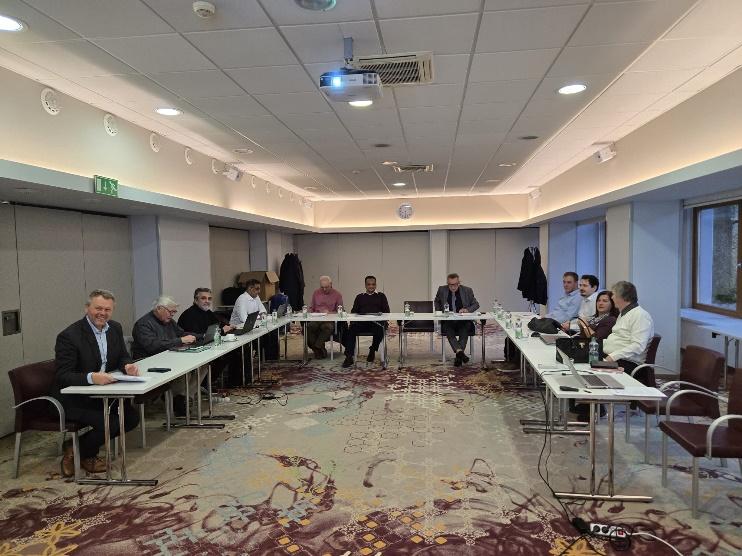
The Advisory Board meeting, which took place on December 3, 2025, at Terme Krka's Hotel Vitarium, brought together regulatory experts, distribution specialists, and practising surgeons to assess the FreeHand system's current state and determine its future development goals. Understanding where we stand, identifying what works, and addressing what doesn't was the session's obvious structure.
1. Framework for Opening
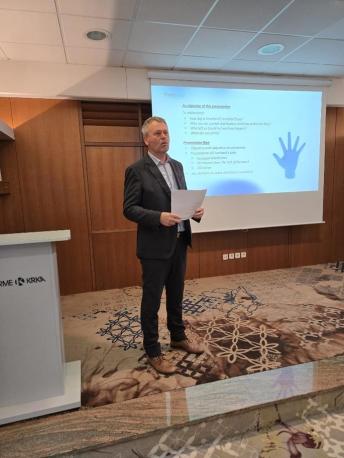
Dušan Plut outlined the day's action-driven strategy and strategic expectations.
An outline of the regulatory position was given by Ludvik Uhan, who also clarified the parameters that must be met by the subsequent stages of development.
The goal was to develop a practical framework rather than a broad vision.
2. Lessons from Experience
Dr Jeremy Russell presented a concise analysis of past decisions, highlighting which practices added value and which must be discontinued.
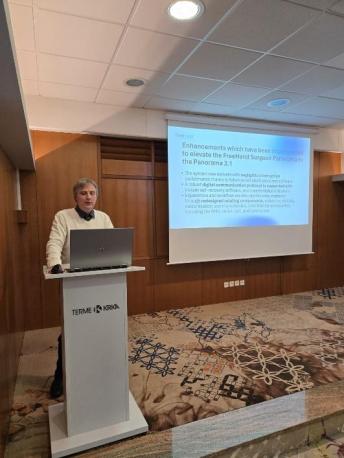
This led to Janez Gramc’s review of FreeHand Panorama 2.1, focusing on the system’s current capabilities and the technical implications of proposed upgrades.
The discussion made one point clear: iteration must follow clinical reality, not internal assumptions.
3. Market Review and Strategic Focus
In the sales and marketing session, Arnaud A. LAYLLE, Ernst Schaaf and Ludvik Uhan examined the distributor network, differentiating active partners from nominal ones.
Target countries for 2026–2027 were reassessed based on feasibility, not convenience.
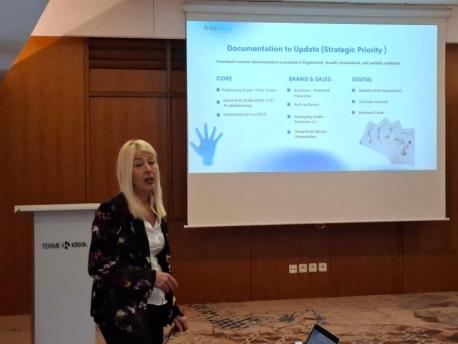
Tijana Čečević addressed the issue of inconsistent messaging, underlining the need for communication that accurately reflects the system’s strengths and limitations. The conversation extended to conference strategy, concluding that measurable engagement is more valuable than broad visibility.
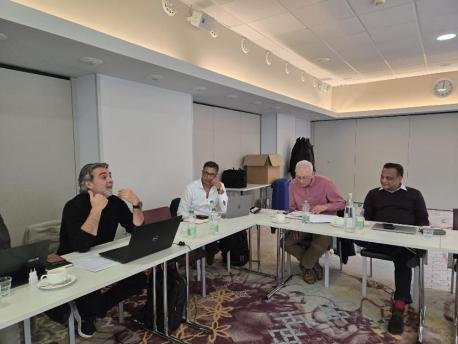
4. Abstraction-Free Clinical Requirements
Under the direction of Prof. Tan Arumpalam and Dr Rajesh Sivaprakasam, the clinical session offered realistic and direct input from operating rooms.
Among the topics covered were:
- workflow disruptions brought on by particular system behaviours;
- dependability difficulties seen during procedures;
- enhancements needed to interact smoothly with surgical teams;
- approaches to both public and private hospital contexts.
- Different operational expectations were demonstrated by case studies from the NHS and private providers, yet there was a common need for uniformity and clarity.
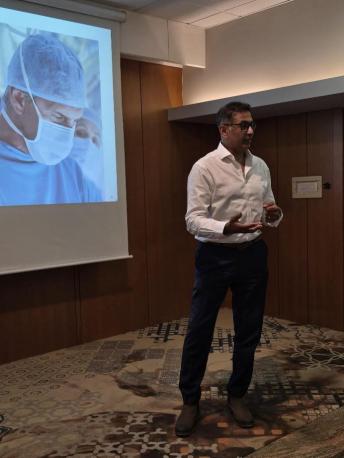
5. Final Thoughts and Quick Actions
Following Ludvik Uhan's summary of the operational decisions, Dušan Plut introduced a short-term action plan with clear roles and due dates.
A common consensus emerged from the meeting: advancement necessitates quantifiable pledges rather than broad declarations.